 By
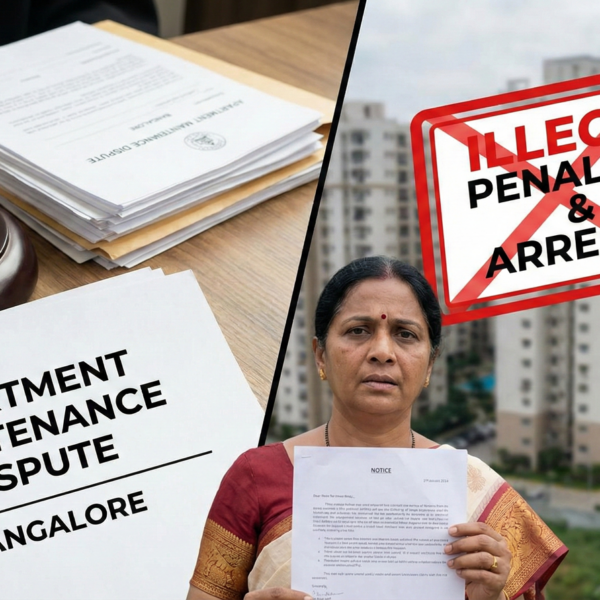
By The secondary car market in India often operates on a dangerous assumption: that handing over the keys and signing a delivery note ends your ownership. It does not. Under Section 2(30) of the Motor Vehicles Act, the law recognizes only the “Registered Owner”—the person named in the RTO database.
Until that record changes, you remain financially and legally responsible for every accident, traffic violation, or criminal act involving the vehicle, regardless of who is driving.
This analysis examines the strict liability frameworks enforced by Indian courts in 2026, including the risks of MACT claims, the “Superdari” custody trap, and the specific VAHAN filings required to force a buyer to complete the transfer.
Sold Your Car Years Ago? You Might Still Own the Liability.
The secondary car market in India often operates on a dangerous assumption: that handing over the keys and signing a delivery note ends your ownership. It does not. Under Section 2(30) of the Motor Vehicles Act, the law recognizes only the “Registered Owner”—the person named in the RTO database. Until that record changes, you remain financially and legally responsible for every accident, traffic violation, or criminal act involving the vehicle, regardless of who is driving.
Contents
The Quick Take
In 2026, the Indian judiciary firmly prioritizes the RTO registry over physical possession. If you sold a vehicle and the buyer never transferred the RC, you remain liable for accidents, crimes, and challans. The Supreme Court rulings in Naveen Kumar (2018) and Brij Bihari Gupta (2025) confirm that the “Registered Owner” pays the price for the buyer’s negligence.
The “Registered Owner” Doctrine
The Motor Vehicles Act, 1988, was engineered to protect accident victims. To do this, the law needs a clear target for liability. That target is the person named in the government records.
Section 2(30) of the Act defines the “owner” exclusively as the person in whose name the motor vehicle stands registered. The definition uses the word “means,” making it exhaustive. It leaves no room for debate regarding informal sales notes or delivery challans.
Fig 1. The liability gap between Sale Date and RC Transfer Date.
The Three Pillars of Risk
When a buyer fails to submit Form 29 and Form 30 to the RTO, the seller remains exposed to three distinct categories of danger.
1. Financial Ruin (MACT Claims)
If the vehicle causes a fatal accident, the Motor Accident Claims Tribunal (MACT) awards compensation to the victim’s family. This often runs into crores of rupees. If the buyer has let the insurance lapse—a common occurrence with unregistered transfers—the court will seize your assets to pay the victim. The Supreme Court in Naveen Kumar v. Vijay Kumar established that the registered owner must pay, even if they haven’t seen the car in years.
2. Criminal Prosecution
Vehicles that are not transferred are frequently used for smuggling, robbery, or terror activities because they lead to a dead end (you). In Prabhakaran K v. State of Karnataka (2023), the High Court refused to quash criminal proceedings against a seller simply because he claimed he sold the bike. You will face trial, hiring lawyers to prove your innocence while the police treat you as a suspect.
3. The E-Challan Avalanche
Automated cameras do not read sale agreements. They read license plates. Speeding tickets and red-light violations will accumulate in your name. Non-payment leads to court summons and blacklisting of your future vehicle purchases.
The “Superdari” Nightmare: Why You Can’t Just Walk Away
Many sellers assume the worst-case scenario is a fine. It is much worse. If the vehicle is used in a serious crime (murder, kidnapping, or narcotics transport), the police will seize it as “Case Property” (Mudde Maal). Under Sections 451 and 457 of the CrPC (or corresponding sections in the BNSS, 2023), only the Registered Owner can apply for interim custody of the vehicle.
This legal procedure is called Superdari. As the registered owner, the court forces you to:
- Physically appear in court to file a bond (Superdarinama).
- Take custody of the vehicle (often damaged or stripped).
- Promise not to sell or modify the vehicle until the trial ends (which could take 5–10 years).
- Produce the vehicle in court whenever the judge demands.
The buyer who actually committed the crime cannot apply for Superdari because they are not the owner on record. You are effectively trapped as the unpaid caretaker of criminal evidence.
The Corporate Trap: Employee Buyouts
A common practice in India involves companies selling used fleet vehicles to employees as a perk. Often, these transactions are handled casually—keys are handed over, and a “No Objection” letter is issued by HR. However, the Registration Certificate often remains in the Company’s name until the employee resells it years later.
Remedy for Corporates: Companies must enforce a “Transfer First, Handover Later” policy. Withhold the final settlement or gratuity until the employee produces the new RC card.
The NRI / Expat Trap: Leaving India?
Many individuals sell their vehicles just weeks before emigrating to countries like Canada, the UK, or the USA. In the rush, they sign blank Forms 29/30 and hand them to an agent.
If the vehicle is not transferred and is subsequently involved in a crime, the Indian courts can issue summons that travel across borders. Under the Hague Service Convention, an Indian court summons can be served to you at your foreign residence.
- Visa Impact: An open criminal case or a “Proclaimed Offender” status in India can flag background checks for visa renewals or citizenship applications abroad.
- Airport Risk: You may face detention at Indian immigration upon your return if a Look Out Circular (LOC) was issued due to your non-appearance in a court case involving your registered vehicle.
The FASTag & Financial Leak
The integration of FASTag with personal banking has created a new layer of risk. FASTags are often linked to the seller’s Paytm wallet or bank account. If the sticker is not physically removed from the windshield before handover:
- Financial Drain: Toll charges will continue to be deducted from your account. While you can “blacklist” the tag online, physical removal is the only guarantee.
- Forensic Location Tracking: In criminal investigations, police use FASTag data to track vehicle movement. If your bank account pays the toll at a border checkpost used by smugglers, you become a prime suspect in the conspiracy.
The Insurance Trap (Section 157)
Most sellers believe that handing over the insurance policy ends their duty. This is legally incorrect and dangerous. Under Section 157 of the Motor Vehicles Act, the insurance policy is deemed transferred only for a period of 14 days from the date of transfer of the vehicle.
If the buyer does not apply to the insurer within those 14 days to transfer the policy to their name, the “Own Damage” section of the policy lapses. While “Third Party” liability might technically persist to protect victims, insurance companies frequently litigate this point, arguing that the contract was with the seller, not the buyer. If the insurer repudiates the claim, the financial burden falls back on the registered owner.
Fig 2. The 14-Day Automatic Transfer Window vs. Reality.
The Scrap vs. Sell Threshold
At what point does the legal risk of selling an old car outweigh the cash value? Legal experts suggest a “Risk Threshold.” If the market value of your vehicle is less than ₹40,000, the cost of potential litigation (lawyer fees for a single appearance start at ₹5,000) makes selling it to a stranger a poor financial decision.
For low-value vehicles (10+ years old), the safest route is the Registered Vehicle Scrapping Facility (RVSF). You might get slightly less cash than a private sale, but you get a “Certificate of Deposit” which is absolute proof of the vehicle’s destruction, legally inoculating you from all future liability.
Civil Remedy: The Specific Performance Suit
When police complaints fail (often dismissed as “civil disputes”), the most robust legal tool is a Civil Suit for Specific Performance and Mandatory Injunction.
You can approach the Civil Court to obtain a judicial order compelling the buyer to transfer the RC. Since the sale agreement implies a duty to transfer, the court can:
- Issue a directive to the RTO to accept your documents unilaterally.
- Appoint a court officer to sign the transfer forms on behalf of the recalcitrant buyer (under Order XXI, Rule 34 of CPC).
While slower than a police complaint, a civil court decree is the only document that legally absolves you of ownership if the buyer refuses to cooperate.
The Inter-State NOC Limbo
Transferring a vehicle from one state to another (e.g., Delhi to Haryana) introduces the “NOC Limbo” risk under Section 48 of the MV Act.
When you obtain a No Objection Certificate (NOC) from the home RTO, your local file is marked “Transferred.” However, ownership does not legally change until the buyer registers the NOC at the destination RTO. If the buyer never registers it (to save on Road Tax), the vehicle exists in a legal “Ghost State.”
Courts have ruled that if the transferee (buyer) fails to register the NOC, the liability snaps back to the original transferor (you) because the chain of title was never completed in the new state’s registry.
The Dealer Dilemma & “Park and Sell”
Selling to a used car dealer or an online aggregator (like Cars24, Spinny, or local mechanics) introduces a specific legal gray area. Dealers often hold inventory for months before finding a final buyer. They do not transfer the RC to their name to avoid adding a “Second Owner” count to the RC, which devalues the car.
The 2023 Amendment (Rule 55A): The Central Motor Vehicles (Twenty-third Amendment) Rules now allow registered dealers to apply for an “Authorisation Certificate.”
If you sell to a registered dealer, ensure they upload the vehicle details on the VAHAN portal as “Stock in Hand.” This shifts limited liability to the dealer. However, for unorganized local dealers who do not use VAHAN, you remain fully liable until they find a buyer.
Strategic Remedial Frameworks
If you find yourself in this situation, passivity is fatal. You must act to create an evidentiary shield. Here is the escalation matrix.
Step 1: Digital Intimation (Form TCR)
Use the VAHAN portal immediately. The “Transfer of Car Report” allows you to log the sale digitally. This creates a government timestamp of your intent to sell.
Step 2: The Legal Notice
Send a strict legal notice to the buyer. Do not ask politely. Demand the transfer within 15 days or threaten criminal action for Breach of Trust.
Step 3: Police General Diary (GD)
Do not file a theft FIR. That is perjury if you sold the car. File a General Diary (GD) entry stating the buyer is refusing to transfer the RC. This document is your primary shield if the car is used in a crime.
How to “Blacklist” the Vehicle
If the buyer is untraceable and you fear liability, you can force the RTO’s hand by applying for Blacklisting.
1. Gather Evidence
Collect the delivery note, sale receipt, proof of payment (bank statement), and the copy of the Police GD entry.
2. Written Application
Submit a formal application to your RTO officer (The Registering Authority) requesting “Blacklisting due to Non-Transfer.”
3. The Effect
Once blacklisted, the vehicle cannot be insured, get a PUC certificate, or be re-sold. This effectively makes the car illegal to drive, forcing the buyer to contact you.
4. The Risk
Be aware that blacklisting prevents any transaction. If you later want to help the buyer transfer it, you must first apply to remove the blacklist.
Comparison of Remedies
| Remedy Strategy | Cost | Effectiveness | Risk Level |
|---|---|---|---|
| Delivery Note Only | Zero | Low | High (Ignored by MACT) |
| Police GD Entry | Low | Medium | Medium (Good for criminal defense) |
| Legal Notice | Medium | High | Low (Forces buyer action) |
| Civil Suit (Injunction) | High | Very High | Low (Court Order) |
| High Court Writ | Very High | Absolute | Zero (Judicial order) |
Case Law Deep Dive
Understanding specific judgments helps in formulating a legal defense.
Held that the registered owner is entitled to “Own Damage” claims even if the car was sold, provided the RC was not transferred.
Established that specific performance suits can be filed to force the buyer to transfer the RC.
Forms Decoded & Draft Templates
Form 29 (Notice of Transfer)
The seller’s official intimation to the RTO that possession has been handed over. Must be submitted in duplicate.
Form 30 (Report of Transfer)
The actual application for transfer of ownership. If the transfer is within the same state, this must be filed within 14 days.
Form 28 (NOC)
Required only for Inter-State transfers or transfers between different RTO jurisdictions within a large state.
Form 35 (Hypothecation Termination)
Crucial if the car was on a loan. The bank must issue this NOC before you can sell the car.
Draft: Strict Legal Notice to Buyer
Draft: Police General Diary Complaint
Frequently Asked Questions
Generally, no. Section 55 of the MV Act allows cancellation mainly if the car is destroyed or scrapped. RTOs rarely cancel registration just because a buyer is lazy, as the car is still physically on the road.
Apply for “Blacklisting” at the RTO. Submit your sale proofs and Police GD. Once blacklisted, the car cannot get insurance or pass pollution checks, forcing it off the road.
No. A notary agreement is a valid contract between two people, but it does not bind the State. The RTO record supersedes the notary agreement in accident claims.
Yes, but with caveats. While Section 157 says the certificate of insurance is “deemed” transferred for third-party risks, insurers often contest this if the delay exceeds reasonable limits. It is risky to rely on this automatic transfer indefinitely.