
 By
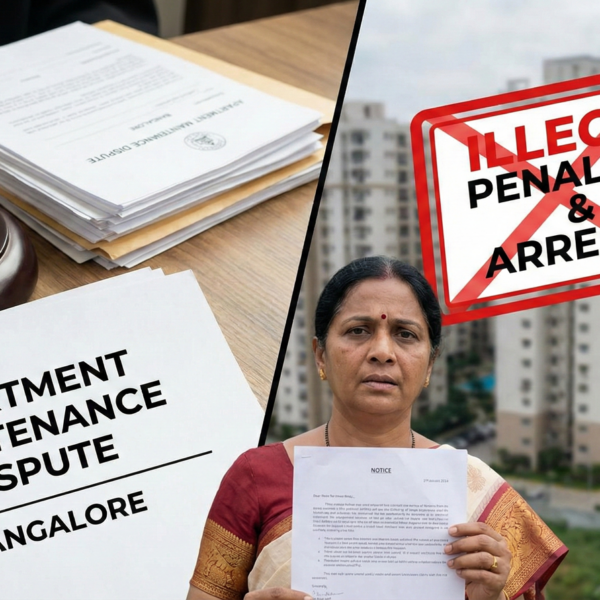
By The employment landscape within the Indian Information Technology sector frequently features complex contractual paradigms. A recurring issue is the phenomenon of abrupt resignations by newly onboarded employees followed rapidly by aggressive legal and financial retaliation from the corporate entity.
A quintessential illustration of this mechanism occurs when an employee having served a negligible tenure—such as a mere ten days—is served with a legal demand notice from a prominent IT corporation’s law firm.
These notices typically demand exorbitant sums often nearing ₹97,000 categorized under ambiguous headers such as “arrears recovery” (purportedly for training costs) and “notice pay recovery” while simultaneously wielding the threat of civil litigation and criminal prosecution.
Managing Employment Contract Disputes and Recovery Notices in the Indian Information Technology Sector
A forensic analysis of the legality behind corporate financial demands following early resignation in India.
The employment landscape within the Indian Information Technology sector frequently features complex contractual paradigms. A recurring issue is the phenomenon of abrupt resignations by newly onboarded employees followed rapidly by aggressive legal and financial retaliation from the corporate entity. A quintessential illustration of this mechanism occurs when an employee having served a negligible tenure—such as a mere ten days—is served with a legal demand notice from a prominent IT corporation’s law firm. These notices typically demand exorbitant sums often nearing ₹97,000 categorized under ambiguous headers such as “arrears recovery” (purportedly for training costs) and “notice pay recovery” while simultaneously wielding the threat of civil litigation and criminal prosecution.
Legal Notice Assessment Tool
Use the interactive application below to analyze the specific demands in your legal notice and determine immediate counter-strategies before responding.
Interactive modules process data locally and do not transmit your inputs to third-party databases.
Organizations like the Nascent Information Technology Employees Senate (NITES) frequently raise official complaints with the Ministry of Labour and Employment regarding arbitrary recovery policies orchestrated by major IT firms wherein experience certificates and relieving letters are withheld to coerce payment.
The Legal Framework of Employment Restraints in India
The foundational legal premise governing employer-employee relationships and restrictive covenants in India is firmly anchored in the Indian Contract Act 1872 (ICA) interpreted continuously through the lens of the fundamental rights guaranteed by the Constitution of India.
Section 27 of the Indian Contract Act 1872
Section 27 of the ICA explicitly declares that any agreement by which a person is restrained from exercising a lawful profession trade or business of any kind is void to that extent. Historically the Indian judiciary exhibits a protective stance toward the employee’s right to livelihood treating post-termination restrictive covenants with profound skepticism.
Judicial interpretations draw a critical distinction between negative covenants operating during the subsistence of an employment contract and those attempting to restrict mobility beyond the termination of the contract. In the landmark judgment of Niranjan Shankar Golikari v. Century Spinning and Manufacturing Co. (1967) the Supreme Court of India established that restrictive covenants requiring exclusive service during the active term of employment do not constitute an illegal restraint of trade under Section 27 provided they are not unconscionable or harsh.
The Paradigm Shift: Vijaya Bank v. Prashant B. Narnaware (2025)
The legal landscape regarding the recovery of corporate investments made in employees saw a pivotal clarification in the recent Supreme Court judgment in Vijaya Bank & Anr. v. Prashant B. Narnaware delivered in May 2025. The Supreme Court upheld the validity of an employment bond that mandated a bank employee to serve a minimum of three years or remit ₹2,00,000 as liquidated damages upon premature resignation.
Strict Conditionalities for Enforceability (2025 Ruling)
-
Proportionality to Actual Investment: The ₹2,00,000 penalty was upheld specifically because it was a genuine pre-estimate of substantial demonstrable costs incurred during a highly specialized recruitment onboarding and training process.
-
Absence of Unconscionability: The Court verified the bond was executed voluntarily and the compensation demanded reflected a rational commercial reality. This ruling pertained to a Public Sector Undertaking (PSU) with unique recruitment processes; application to private sector IT firms requires stringent case-by-case evaluation of actual loss.
Anatomy of the Financial Demand
When an IT professional departs after a negligible tenure and is subjected to a demand comprising “arrears recovery” (training costs) and unserved notice period pay the legality of such a demand is fundamentally undermined by the absence of genuine financial injury to the employer.
Unpacking the “Arrears Recovery” and Training Cost Paradigm
Employers frequently justify financial penalties under the guise of recouping training and onboarding investments. Indian courts require employers to conclusively prove actual loss to enforce an employment bond in cases of early resignation. In a scenario where an employee serves for only ten days attends merely a standard administrative onboarding session and receives a brief internal orientation without any specialized training the employer incurs no distinct quantifiable financial loss beyond standard overhead.
In the pivotal case of Sicpa India Limited v. Shri Manas Pratim Deb the court clearly established the principle of proportionality. Even when the employer proved an actual out-of-pocket expenditure of ₹67,000 against a ₹2,00,000 bond the court pro-rated the damages to merely ₹22,000 based on the specific tenure served. Arbitrarily categorizing ₹50,000 as a “training cost” for a ten-day stint involving no specialized instruction constitutes an unenforceable penalty.
The Legal Nuances of Notice Period Pay Recovery
Applying a 90-day salary penalty to an employee who has been in the corporate ecosystem for only ten days is legally fraught. During the initial days of employment an individual is functionally on probation or in a shadowing phase. The operational disruption caused by their exit is minimal as they have not yet been integrated into billable client projects or critical workflows. The actual legal injury suffered by the employer does not logically align with a 90-day salary forfeiture.
Jurisprudence of Contractual Damages
To fully dismantle the legality of exorbitant recovery demands it is necessary to deeply analyze the statutory mechanisms governing breach of contract in India specifically Sections 73 and 74 of the Indian Contract Act 1872.
| Legal Principle | Description under Indian Contract Act 1872 | Supreme Court Interpretation & Evidentiary Standard |
|---|---|---|
| Liquidated Damages | A pre-estimated mutually agreed sum to be paid in the event of a specific breach. | Enforceable under Section 74 only if it is a genuine good-faith pre-estimate of actual economic loss. |
| Penalty | An exaggerated disproportionate sum stipulated in the contract primarily to create fear and deter a breach. | Void and unenforceable. Courts will not enforce the penalty but will only award reasonable compensation for proven loss. |
| Reasonable Compensation | The actual quantum of damages awarded by the judiciary to restore the injured party. | Cannot exceed the contractual limit; requires the claimant to demonstrate that a “legal injury” was suffered. |
The Evidentiary Burden for Claiming Compensation
Despite the phrasing “whether or not actual damage or loss is proved” in Section 74 decades of Indian jurisprudence have established that this clause does not grant a windfall to the non-breaching party. The Supreme Court has consistently held that the stipulated sum merely acts as a ceiling. The employer is legally burdened to show that the employee was the beneficiary of special favor specialized training or concessions involving actual monetary commitments at the expense of the employer. Without verifiable invoices or third-party vendor receipts proving this expenditure the demand collapses under the weight of Section 74 as an unenforceable penalty.
The Weaponization of Criminal Law in Civil Disputes
A highly distressing element of the legal notices issued by law firms representing IT corporations is the explicit threat of initiating both civil and criminal action if the demanded sum is not paid within a stipulated timeframe usually 15 days.
Interactive Filter: Criminal Offenses Under BNS (2023)
Select a criminal charge frequently cited in corporate legal notices to understand the legal requirements for conviction.
Section 316 BNS: Criminal Breach of Trust
Required Ingredients: Entrustment of property and the subsequent dishonest misappropriation conversion or disposal of that property in violation of a contract or law.
Application to 10-Day Tenure: If an employee formally resigns and unequivocally returns all corporate assets (laptops access cards data) with written email confirmation acknowledging this return the foundational element of “misappropriation of entrusted property” is entirely obliterated. Failure to serve notice is a civil breach not theft.
Section 318 BNS: Cheating
Required Ingredients: Fraudulent or dishonest intention existing from the very inception of the transaction utilizing deception to induce another to deliver property.
Application to 10-Day Tenure: Resigning after ten days due to a better opportunity or a realization of a role mismatch does not constitute criminal deception. It is standard labor mobility.
Section 351 BNS: Criminal Intimidation
Required Ingredients: Threatening injury to a person reputation or property with the explicit intent to cause alarm or force the person to commit an act they are not legally bound to do.
Application: Interestingly this section is often more applicable to the corporate entity aggressively demanding unverified funds under threat of withholding relieving letters than to the resigning employee.
Judicial Condemnation of Criminalizing Civil Breaches
The Supreme Court of India and various High Courts have consistently and severely condemned the practice of converting purely civil contractual disputes into criminal cases merely to exert pressure. In the recent judgment of Badrinarayana Jaganathan v. The State of Karnataka (2025 INSC 105) the Supreme Court quashed criminal proceedings arising directly from an employment dispute noting it was a deliberate attempt to “reclassify” a civil dispute into a criminal matter to force a settlement.
Therefore the inclusion of “criminal action” in a demand notice for a disputed notice period recovery is a legally untenable intimidation tactic bordering on professional misconduct by the drafting legal firm.
Assessing the Probability of Civil Litigation
The probability of actual civil litigation for amounts under ₹1,00,000 is infinitesimally low. Large IT corporations operate on strict cost-benefit analyses. Initiating a civil recovery suit requires the company to pay court fees engage external legal counsel for potentially years of hearings and invest significant internal administrative bandwidth.
These legal notices are almost exclusively utilized as automated algorithmic scare tactics designed to coerce compliance and extract funds from uninformed ex-employees through intimidation rather than serving as genuine preludes to complex litigation.
Practical and Operational Risks: The Digital Employment Trail
While the legal threats are highly improbable the practical risks reside within the digital compliance ecosystems of modern human resources specifically the Employees’ Provident Fund Organisation (EPFO) portal.
Even a highly abbreviated ten-day stint will result in the creation of a Member ID under the employee’s Universal Account Number (UAN) complete with a formalized Date of Joining (DOJ). Third-party BGV agencies routinely utilize UAN verification to detect resume fraud unexplained employment gaps and the rising phenomenon of dual employment.
| Operational Risk | Mitigation Strategy |
|---|---|
| Resume Discrepancy | Practice complete transparency with prospective employers. Explain that the brief tenure was the result of an immediate realization of a severe cultural or role mismatch prompting an ethical and rapid exit. |
| Dual Employment Flags | Ensure there is no overlap between the exit date of the old company and the joining date of the new company. |
| Missing Exit Dates | Employees can now log into the Unified Member Portal select “Mark Exit” and self-update their exit date using an Aadhaar-linked OTP completely bypassing the uncooperative former employer. |
Formulating a Strategic Response to the Legal Notice
Ignoring a legal notice is a high-risk gamble. In Indian civil jurisprudence protracted silence upon receiving a formal documented legal demand can be construed by a court as tacit non-cooperation or an implicit admission of the facts alleged. A well-crafted reply immediately halts the corporate narrative.
A response document must incorporate specific structural and legal components to be effective:
- Preliminary Objections: Categorically state that the demand notice is misconceived legally untenable vexatious and an attempt to extort funds through intimidation.
- Chronological Factual Matrix: Detail the highly limited tenure lack of specialized training formal resignation and confirmed return of all corporate assets backed by email evidence.
- Invocation of Section 74 ICA: Demand the employer provide irrefutable documentary evidence proving an actual out-of-pocket financial loss.
- Rebuttal of Criminal Allegations: Strongly condemn the baseless threat of criminal action under the BNS stating it is an abuse of process.
- Counter-Demand: Demand the immediate release of funds under the Payment of Wages Act for the actual days worked.
Sample Template Format: Legal Reply Structure
This structure can be adapted for a self-drafted response via email to the law firm representing the IT company.
Alternative Dispute Resolution and Regulatory Recourse
Beyond civil litigation employees possess administrative avenues to counter coercive corporate practices. The Ministry of Labour and Employment operates the SAMADHAN (Software Application for Monitoring And Disposal Handling of Industrial Disputes) portal providing a centralized mechanism to file grievances regarding illegal deductions unpaid wages and workplace harassment.
Filing a formal complaint often acts as a catalyst resulting in the immediate cessation of hostile recovery demands from corporate HR departments averse to government scrutiny. Furthermore the Payment of Wages Act 1936 mandates the timely disbursement of earned wages. Withholding salary for actual days worked to offset an arbitrary penalty is a direct violation of this statute.
Navigating the Relieving Letter Conundrum
The primary mechanism of corporate coercion relies on withholding the relieving letter and experience certificate. Indian labor law does not feature a specific statutory provision mandating the issuance of a relieving letter. However judicial precedent establishes that withholding these documents to force the payment of disputed unliquidated damages is arbitrary.
In the context of a ten-day tenure the practical utility of a relieving letter is zero. The strategic approach is to completely abandon the pursuit of these documents neutralizing the employer’s sole point of leverage.
Macro Trends in IT Employment Contracts (2025-2026)
Recent analyses of employment contracts issued by major Indian IT firms reveal a hardening of exit clauses driven by high attrition rates and economic volatility. Companies are increasingly integrating complex clawback provisions covering joining bonuses relocation expenses and specialized training costs. This trend underscores the necessity of meticulous pre-employment contract review.
Frequency of Legal Notices vs. Actual Litigation Initiated
Estimated ratio of demand notices sent vs civil suits filed for amounts < ₹1 Lakh.
Frequently Asked Questions
No it is highly unlikely to be enforceable. Applying a 90-day salary penalty to an employee who has been in the company for only ten days does not align with actual legal injury suffered by the employer. Courts view clauses forcing the forfeiture of several months of salary without corresponding actual disruption as punitive and unenforceable.
Ignoring a legal notice is a high-risk gamble. In Indian civil jurisprudence protracted silence can be construed as an implicit admission of the facts and liabilities alleged. A well-crafted reply immediately halts the corporate narrative and places your defense on the official record.
It is entirely legal to respond directly without an advocate. A self-drafted reply must be highly professional strictly factual and systematically address the alleged liabilities. However retaining a lawyer (which is relatively inexpensive) drastically shifts the risk profile signaling you are legally aware and prepared to escalate.