 By
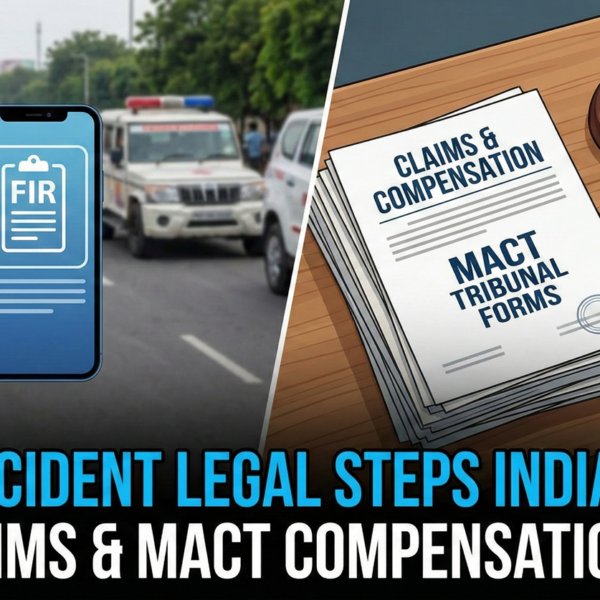
By A road collision in India triggers immediate legal obligations under the Motor Vehicles Act and the Bharatiya Nyaya Sanhita. Knowing exactly what to do in the first 24 hours prevents hit-and-run charges and protects your insurance claim.
This guide outlines the mandatory steps every driver must take at an accident scene. We detail the strict legal protocols, e-DAR reporting timelines, evidence collection methods, and how to formally notify your insurance provider.
You will also find a direct comparison between legacy IPC laws and current BNS regulations governing road safety and accident liability. Read the specific dos and don’ts to ensure you handle the situation lawfully and avoid common insurance claim denials.
Updated till Feb 2026
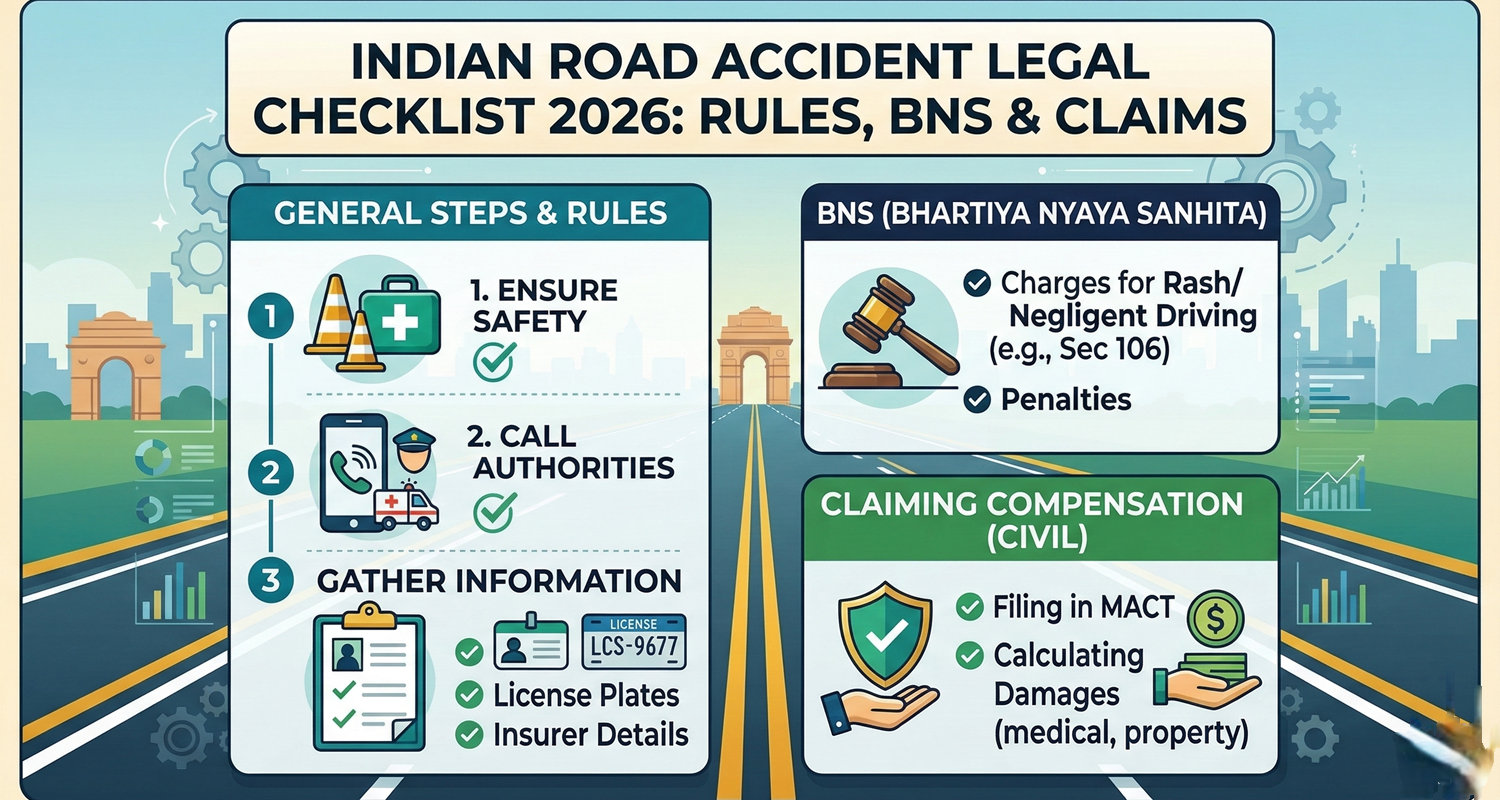
Indian Accident Legal Checklist
A direct guide for drivers involved in road collisions in India. Understand your legal duties under the Motor Vehicles Act and the Bharatiya Nyaya Sanhita.
The Legal Dos
- ✓ Stop your vehicle immediately. Section 132 of the Motor Vehicles Act makes this mandatory.
- ✓ Provide medical aid. Take the injured person to the nearest registered medical practitioner.
- ✓ Share your details. Provide your name, residential address, and vehicle owner details to the affected party.
- ✓ Report to the police within 24 hours. Failure to do so invites legal penalties.
- ✓ Fleeing mob violence is permitted. You must report the incident to a police station 25 to 50 kilometers away to avoid hit-and-run charges.
The Legal Don’ts
- ✗ Do not apologize at the scene. Courts treat spontaneous statements as evidence under the res gestae rule.
- ✗ Do not declare you are uninjured. Adrenaline masks symptoms of physical trauma. Seek a medical evaluation.
- ✗ Do not negotiate privately. Settling without an official police report destroys your insurance claim.
- ✗ Do not post on social media. Opposing legal counsel will use your digital statements against you in a tribunal.
- ✗ Do not speak directly to the other party’s insurance adjuster without legal representation.
On-Scene Evidence Protocol
Collect physical evidence before moving vehicles. The police rely on these initial records to determine fault under Section 279.
1. The Four Corners
Photograph all four corners of both vehicles. This shows the exact angle of impact and disproves false narratives about who hit whom.
2. Skid Marks
Take wide-angle photos of the road surface. Skid marks prove braking distance and help authorities calculate the speed of both vehicles.
3. Traffic Signs
Capture nearby stop signs, traffic lights, or speed limit boards. This establishes the legal right of way at the intersection.
4. Identifiers
Record the license plates of all involved vehicles clearly. Obtain the contact numbers of independent witnesses present at the scene.
Digital Reporting Timeline
The e-DAR system enforces strict deadlines for submitting documents to the Motor Accident Claims Tribunal.
Common Insurance Denials
Insurance companies reject claims based on specific policy breaches. Avoid these common legal pitfalls.
Commercial Use
Using a private vehicle registered with a white plate for commercial purposes like carrying paying passengers or goods voids standard comprehensive policies immediately.
Delayed Intimation
Failing to inform the insurance company within the stipulated time limit usually 48 hours gives the insurer grounds to suspect fraud and deny the claim.
Expired License
Driving without a valid active driving license for the specific vehicle class allows the insurer to reject liability entirely under the Motor Vehicles Act.
Intoxication
Driving under the influence of alcohol or drugs breaches the fundamental terms of the insurance contract and results in absolute claim rejection.
Law Changes: IPC vs BNS
| Category | Legacy Law (IPC/Old MVA) | Current Law (BNS/New MVA) |
|---|---|---|
| Dangerous Driving | Section 279 IPC. Up to 6 months jail. | Section 184 MVA. 6 months to 1 year jail. Rs. 1,000 to 5,000 fine. |
| Causing Death (Reported) | Section 304A IPC. Up to 2 years jail. | Section 106(1) BNS. Up to 5 years jail plus fine. |
| Hit-and-Run (Unreported Death) | Section 304A IPC. Variable enforcement. | Section 106(2) BNS. Up to 10 years jail. Status is deferred pending review. |
| Mobile Phone Use | Minor fines. | Section 184 MVA. Fine up to Rs. 10,000. |
Document Templates
Formal Insurance Intimation Letter
Copy this format to report the incident to your insurance provider in writing within 24 hours.