 By
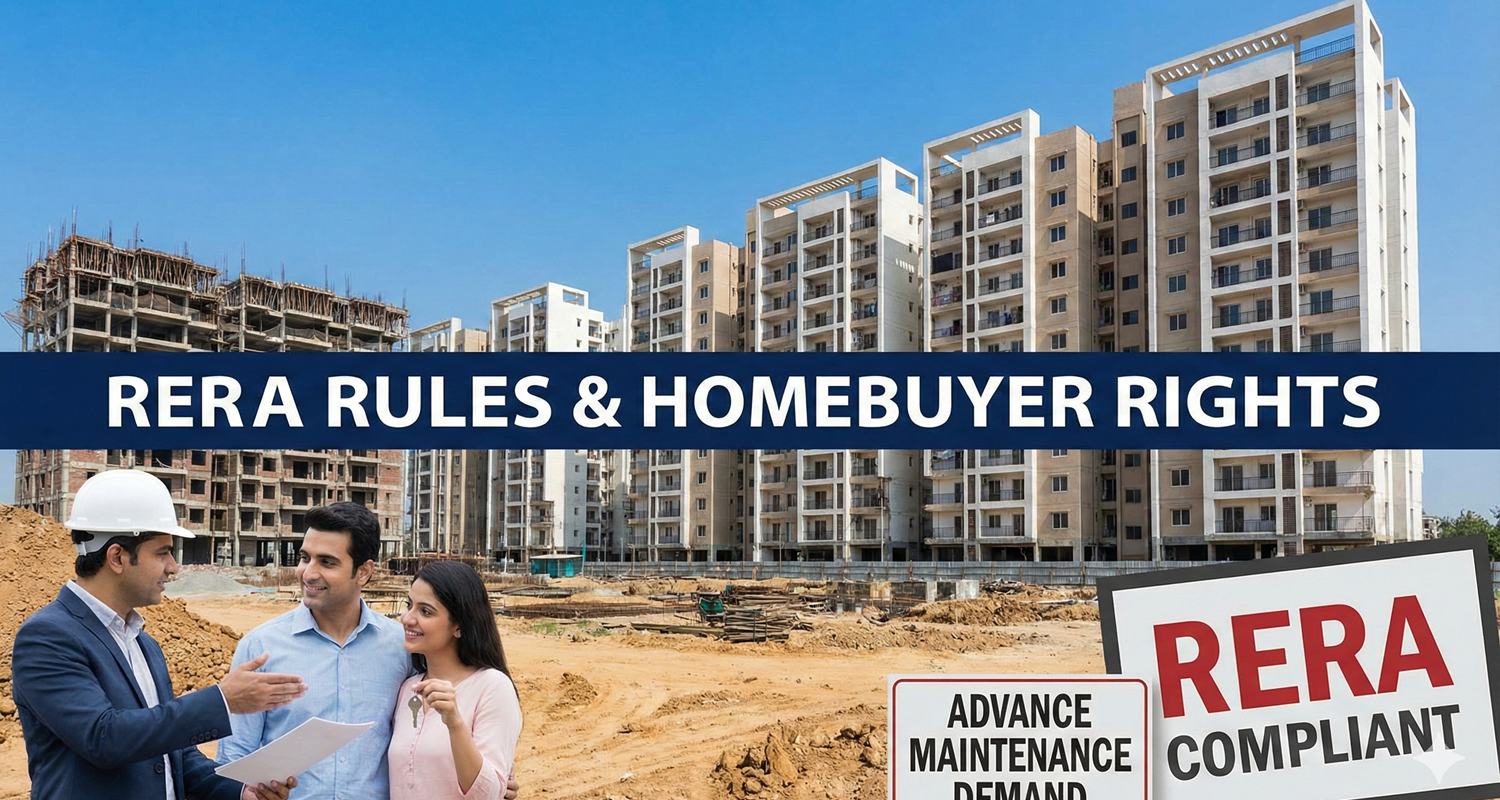
By The handover phase of a real estate project is becoming a major conflict zone between developers and homebuyers. Across Maharashtra, buyers approaching the possession stage face an unexpected financial hurdle. In some cases, reports of developers, that are demanding thirty to forty months of advance maintenance charges and holding physical possession hostage until these lump sums are paid. The ultimatum is simple: no payment equals no keys.
This practice forces buyers to fund three years of future building operations before the resident society even exists. Families already managing double financial burdens from rent and home loan installments find themselves pressured into paying unverified amounts. The demands usually arrive without audited budgets or transparent escrow accounts.
This article examines the legality of long-term maintenance demands under updated MahaRERA regulations. We look closely at how developers bypass financial frameworks, the hidden tax burdens for buyers, and the specific legal steps you can take to secure your property keys without yielding to unfair capital demands.
Analysis of Advance Maintenance Demands and Possession Linkage in Real Estate Sector
Cases have emerged where builders are asking for 30 to 40 months of advance maintenance at possession. Buyers are sometimes told no payment equals no keys. We examine the legality of this practice under MahaRERA rules updated through February 2026.
The Possession Conflict
The handover phase is a highly debated period between real estate developers and property buyers. Buyers face heavy financial pressure when they must pay equated monthly installments for their loans while continuing to pay rent due to construction delays. In certain scenarios, some developers use this phase to request supplementary capital.
In Maharashtra, cases have emerged where developers are asking for maintenance charges spanning thirty to forty months. In specific instances, they also request large corpus fund contributions. Some builders attempt to enforce these requests by delaying physical possession of the property. Buyers question the legality of funding three years of future operations before the society is formed.
The practice of requesting multi-year advance maintenance functions in some cases as an unofficial funding method for builders to bypass escrow restrictions.
The Transparency Deficit
Buyers are sometimes asked to pay massive sums without receiving basic financial disclosures. Certain developers request these payments while providing limited accounting documents. A lack of visibility can create an environment susceptible to financial mismanagement.
No Audited Budget
In some projects, builders collect funds without projecting future operating costs through a certified financial plan.
No Expense Breakup
The demand is often presented as a single lump sum. Buyers cannot see allocations for security, cleaning, or electricity.
No Escrow Account
Funds are sometimes deposited into general developer accounts instead of neutral, protected holding accounts.
The Compliance Trap
Some developers time these requests precisely when buyers are navigating significant financial transitions. Many people avoid legal disputes at the possession stage due to extreme financial exhaustion. The pressure leads buyers to accept specific terms just to get their keys.
-
1
The Double Burden
Buyers are frequently paying rent for their current accommodation while simultaneously paying equated monthly installments for their new home loan.
-
2
Family Disruption
Families have sometimes waited years past the original delivery date. They need certainty to enroll children in local schools and resume normal lives.
-
3
Fear of Retaliation
Buyers worry that filing a formal complaint might result in the builder delaying their specific unit handover even further.
Advance Maintenance Timelines
Legal Standard vs Market Practice
Data visualization based on standard MahaRERA model agreements compared to requests seen in recent cases.
Statutory Framework Governing Maintenance
The Real Estate Regulation and Development Act 2016 outlines strict responsibilities regarding property upkeep. Section 11(4)(d) requires the promoter to maintain essential services on reasonable charges until the association of allottees takes over operational maintenance. The developer manages property maintenance temporarily.
Section 11(4)(e) requires the promoter to form an association or cooperative society within three months from the date the majority of buyers have booked apartments. The legal framework indicates the housing society should be formed by the time physical possession is offered. Collecting three years of advance maintenance contradicts the statutory timeline governing society formation.
Key Legal Provisions
Maintenance vs Corpus
Advance maintenance is a liquid fund used for daily operations. A maintenance corpus is a dedicated reserve fund for long-term capital repairs. The developer holds the corpus fund in a strict fiduciary capacity.
Under RERA provisions, the developer must transfer the entire accumulated corpus principal and detailed audited accounts directly to the association within sixty days following the legal registration of the cooperative society.
Possession Ultimatums
Linking physical possession to the clearance of large maintenance bills is legally precarious. Section 18 of the RERA Act confers an unqualified right to seek immediate possession if the promoter fails to complete the project on time.
The legality of collecting maintenance charges depends on the developer possessing a valid Occupancy Certificate. MahaRERA has ruled against builders levying maintenance fees on buildings lacking an Occupancy Certificate. Buyers have the right to refuse possession if agreed facilities are not delivered.
MahaRERA Order 56/2024
Effective July 2024, Order 56/2024 mandates a strict Tri-Account Escrow Framework. Developers must maintain three distinct bank accounts for every project.
All payments including advance maintenance must go into the Designated Collection Account. From there, seventy percent is automatically swept into a restricted Separate Account for construction costs. Attempting to bypass this by collecting maintenance into an undisclosed operational account violates regulatory mandates.
The Unofficial Exit Bonus
Advance maintenance has, in some cases, become an unregulated funding channel for certain real estate developers. When you multiply hundreds of buyers by massive lump sum collections, the total equals tens of millions of rupees collected immediately before the builder exits the project.
500 Units × 2,00,000 INR Average Request
= 10,00,00,000 INR Unrestricted Capital
This capital sometimes sits entirely outside the RERA escrow mandate.
Later expenses are adjusted through periodic billing cycles. Some developers control the resident facility manager, approving invoices that drain the collected corpus before handing over control to the actual homebuyer society.
Sinking Fund vs. Routine Maintenance
A common point of confusion arises when developers blend routine operational expenses with long-term sinking funds. Routine maintenance covers daily security, housekeeping, and common electricity. A sinking fund is strictly reserved for major structural repairs that might occur years after construction finishes.
Cases have emerged where developers are asking for a single consolidated payment without distinguishing between these two distinct financial reserves. Under cooperative housing rules, sinking funds require specific calculation models based on the construction cost of each unit. Mixing these funds makes it difficult for a future society to separate daily operating cash from mandatory emergency reserves.
The Tax Component on Advance Collections
Real estate developers must apply an eighteen percent Goods and Services Tax on maintenance charges exceeding 7500 rupees per month. Collecting three years of advance payments generates an immediate tax liability. Buyers pay this tax directly to the builder based on unverified future expenses.
Questions arise regarding input tax credits. When the builder eventually transfers control to the resident society, tax credits rarely transfer with the remaining funds. This structure forces buyers to pay taxes on services they have not yet received. It also creates a severe financial discrepancy for the newly formed society during the handover process.
Liability for Unsold Inventory
A major dispute area involves empty apartments. When a project is partially occupied, the developer holds the unsold units. According to regulatory norms, the developer must pay the maintenance charges for all unsold inventory.
Cases have emerged where developers are asking existing residents to bear the full operational cost of the building through inflated advance maintenance calculations. In these scenarios, the developer avoids paying their share by distributing the total building maintenance cost only among the buyers who have taken possession. This practice artificially increases the financial burden on the first wave of occupants.
Interest Accrual and Financial Audits
The advance maintenance and corpus funds generate significant bank interest over a span of two to three years. Regulations dictate that the principal amount along with all accrued interest belongs to the resident society. Developers act only as custodians.
Before the final handover of facility management, buyers must request a comprehensive forensic audit. This audit ensures the developer transfers the exact interest generated rather than absorbing it into their corporate accounts. Missing interest payments deprive the new society of essential emergency reserve funds.
Project Transfer Implications
When a project faces severe delays or financial distress, regulatory authorities might transfer control to a new promoter or directly to the buyer association. In scenarios involving project transfers, any advance maintenance collected by the original developer becomes a contested asset.
RERA guidelines require the outgoing promoter to transfer all collected maintenance and corpus funds to the new managing entity. Without a clear escrow trail, recovering these funds during a project transition becomes highly complicated for the buyers, often requiring separate legal recovery proceedings.
The Facility Management Loophole
Collecting massive amounts of money right before exiting a project creates a potential conflict of interest. Developers control these funds entirely until the resident association is legally formed and recognized.
During this interim period, some developers appoint their own subsidiary facility management companies. In scenarios without independent oversight, these captive agencies generate service bills and adjust expenses internally. By the time the resident society finally takes legal control of the building, the advance maintenance fund is frequently depleted through vendor invoices.
Regulatory Precedents and Judgments
Various state regulatory authorities have passed orders severing the absolute link between physical possession and long term maintenance deposits. Authorities strictly view the Occupancy Certificate and core agreement payments as the primary requirements for handover.
Arbitrary fees added at the final handover stage cannot legally block possession rights. Buyers using these regulatory precedents in their formal legal notices often compel developers to release the keys without protracted litigation. Regulatory benches consistently rule that management duties must transfer to residents swiftly.
Economic Motivations
Certain developers experience severe liquidity shortages during the final construction phases. RERA requires seventy percent of total collected amounts to be deposited into a restricted separate bank account. Advance maintenance collections provide highly liquid cash outside these restrictions.
Some builders categorize these collections vaguely to bypass the escrow requirement. Amassing forty months of operational expenses across hundreds of units generates millions in unrestricted cash flow. They use these funds to service debt or acquire new land. Delaying the formation of the resident association allows the developer to use this capital free of interest for years.
Legal Remedies and Dispute Resolution
If and when property developers ask for unreasonable advance maintenance extending far beyond standard operational periods, buyers have specific avenues for resolution. Approaching these situations requires a methodical evaluation rather than an immediate refusal or unconditional acceptance.
1. Evaluating the Financial Breakdown
Buyers should formally request a projected budget certified by an independent chartered accountant. Compare the proposed per-square-foot rate with established neighboring societies. A developer must justify the exact calculation behind the maintenance figure requested.
2. RERA Conciliation Forums
Many state authorities provide an initial conciliation mechanism. This process involves a neutral mediator and attempts to resolve the financial dispute without lengthy adjudication. Conciliation often helps parties reach a mutual agreement regarding a fair, reduced maintenance period.
3. Formal Adjudication Proceedings
When conciliation fails or developers refuse participation, buyers can file a formal complaint under Section 31 of the RERA Act. The regulatory authority will examine the initial registered agreement to verify if the requested sum aligns with the contracted terms agreed upon during purchase.
Financial Categorization Table
| Financial Parameter | Advance Maintenance Allocation | Maintenance Corpus Fund |
|---|---|---|
| Primary Purpose | Daily operations, security, housekeeping, common electricity. | Long-term capital repairs, structural maintenance. |
| Typical Duration | 12 to 24 months maximum at possession. | One-time percentage of construction cost. |
| Custody Model | Managed by builder until society takeover. Unspent balance transferred. | Held in trust. Entire principal and interest transferred to society. |
| Transfer Timeline | Balance handed over upon society assumption of duties. | Entire fund transferred within 60 days of legal registration. |
Strategic Roadmap for Buyers
Individual protests rarely succeed against well funded development firms. Collective action alters the negotiation dynamics significantly.
Consolidate Allottees
Create verifiable communication channels for all property buyers. A united front prevents the developer from isolating and pressuring individual families.
Request Escrow Verification
Ask for written proof that all collected maintenance funds are entering the RERA designated collection account according to Order 56/2024 rules.
Initiate Society Formation
Do not wait for builder compliance. Buyers hold the legal right to initiate a non cooperative society registration once minimum occupancy thresholds are satisfied.
Recovery Protocols and Order 60/2024
MahaRERA Order 60/2024 establishes a sixty-day deadline for developers to compensate homebuyers following an adjudicatory order. If the developer fails to remit the funds within this window, the buyer can file an application for non-compliance.
MahaRERA issues a formal Recovery Warrant to the District Collector. The Collector has the authority to seize corporate assets, auction properties, and freeze bank accounts. Buyers facing illegal maintenance bills can use the MahaRERA portal to file formal complaints and trigger these recovery protocols.
Legal Disclaimer
The information provided on this webpage constitutes general analysis and does not qualify as formal legal advice. Real estate laws and regulatory frameworks vary by jurisdiction and undergo frequent amendments. The remedies discussed represent common statutory paths available to homebuyers. We advise consulting a qualified legal professional regarding specific disputes with property developers before taking any binding action.